
Think You Have Mold?
South Florida Mold Testing & Inspection
Our certified mold inspectors use advanced air and surface testing to detect hidden contamination and protect your family’s health. Free inspections. Fast results. Licensed and insured professionals serving South Florida. — Restoring Your Property The Safeway!
How Our Professional Mold Testing Process Works
Our mold testing process is built to accurately detect mold growth and evaluate your indoor air quality using industry-standard equipment and certified lab analysis. From inspection to air and surface sampling, we follow a precise, evidence-based approach that delivers reliable results and clear next steps. If you’re concerned about mold in your home, this is the safest way to confirm what you’re dealing with.— Restoring Your Property The Safeway!
Schedule Your Mold Testing Appointment
With Safeway Restoration, getting your home tested for mold is quick, clear, and stress-free. Our certified team handles everything—from inspection to lab analysis—so you get accurate results and a plan you can trust. One appointment, one expert team, and total peace of mind.

STEP 01
Schedule Your Free Inspection & Consultation
We start with a 100% free visual mold inspection. Our certified technician checks your home for visible mold, moisture issues, musty odors, and signs of hidden damage.

STEP 02
Identifying the Source of Your Mold Problem
Using thermal cameras and moisture leak detection tools, we pinpoint where water is getting in and where mold may be developing. This helps us target the problem quickly and accurately.

STEP 02
Professional Mold & Air Quality Testing
If we find areas of concern, we collect air and surface samples using industry-standard equipment. This testing identifies mold species and spore levels so you know exactly what’s in your home.

STEP 04
Independent Lab Results & Detailed Report
Samples are analyzed by an accredited third-party laboratory for accurate, unbiased results. You’ll receive a report showing mold types, spore counts, and our recommendations for remediation.
10 Common Reasons Homeowners Request a Mold Inspection
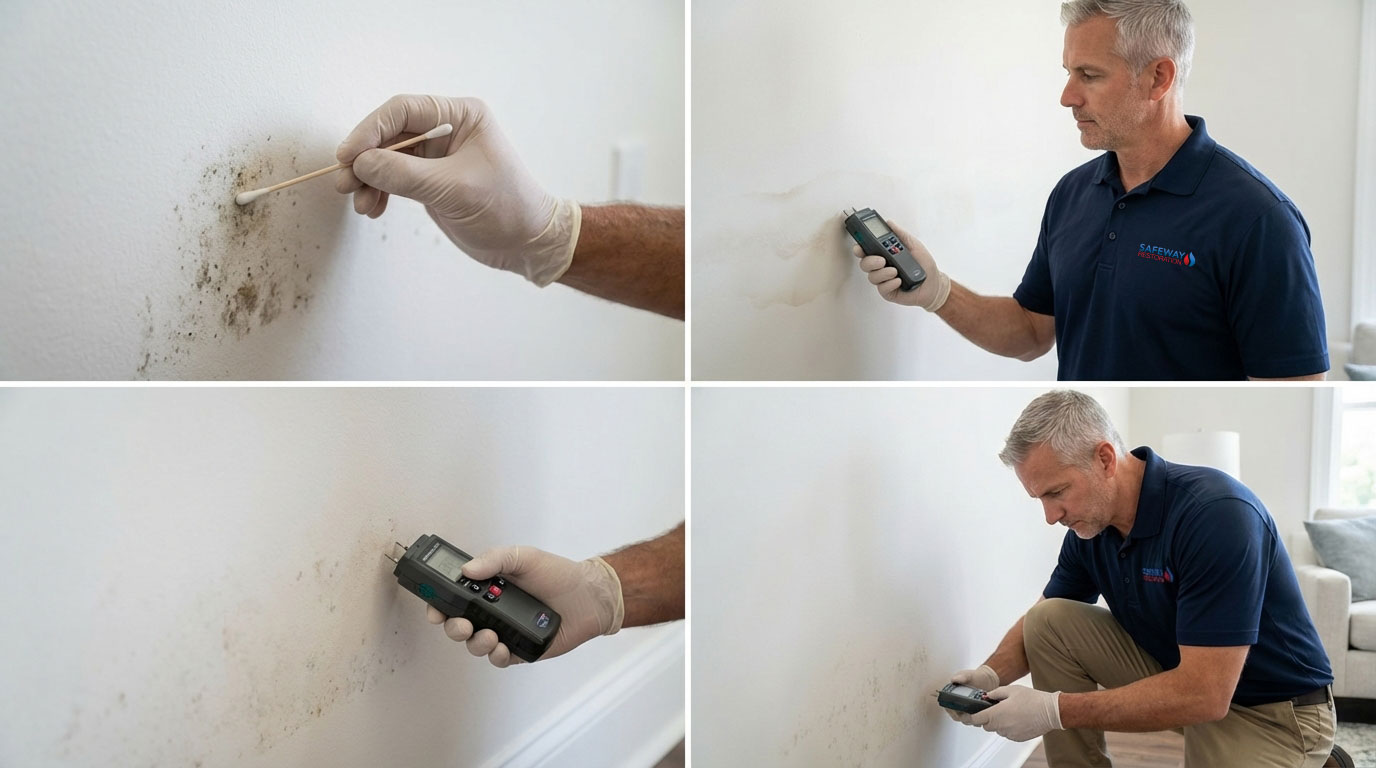
Safeway Restoration performs mold inspections every day, and the reasons people call us are usually very similar. Whether it’s something you’ve seen, smelled, or simply want peace of mind about, these are the top 10 situations that lead homeowners to schedule professional mold testing.
One of the most common triggers for a mold inspection is seeing something unusual—dark spots, streaks, or fuzzy patches on walls, ceilings, furniture, or vents. Sometimes visible growth means a moisture problem has been active for a while. Other times, what looks like “black mold” is harmless dust, staining, or something unrelated. A mold inspection confirms what’s real and what isn’t.
Mold often produces a very distinct smell before it becomes visible. People describe it as musty, earthy, damp, or similar to an “old house” scent. Any noticeable odor change—especially after rain, AC problems, or high humidity—is worth investigating because odors often mean moisture is present somewhere in the home.
Many homeowners call us after experiencing persistent symptoms such as sneezing, runny nose, itchy eyes, headaches, or coughing. These issues can feel like seasonal allergies, but if they improve when you leave the property, it’s a strong sign of poor indoor air quality or elevated mold spores indoors.
New or expecting parents are often extra cautious about the home environment, and for good reason. Infants are more sensitive to mold exposure and indoor air quality issues. Some studies even suggest early exposure may contribute to asthma later in life. Many families schedule mold testing simply to ensure the home is safe for a newborn.
Real estate transactions are another major reason people request mold inspections. Sellers and landlords can temporarily cover up surface staining with paint or cleaning, but they cannot hide airborne mold levels. A mold test gives buyers, renters, and investors confidence that they aren’t inheriting a hidden moisture or air-quality problem.
Any time a property experiences flooding, roof leaks, plumbing issues, AC leaks, or structural water intrusion, the risk of mold growth increases. Even after a water mitigation company says everything is dry, mold testing verifies the home is safe before reconstruction begins. Skipping this step can result in rebuilding over hidden mold and facing major repairs again later.
Sometimes mold inspections become necessary because of disputes with a landlord, tenant, HOA, home seller, or insurance company. Laboratory results provide objective, third-party evidence. Without testing, it becomes your word versus theirs. When necessary, inspectors can also provide expert support during the claims or legal process.
People with asthma, COPD, or chronic breathing issues are often more sensitive to indoor mold exposure. Many clients reach out because their symptoms worsen at home or improve when they’re away. Testing helps determine whether mold is contributing to the problem.
Older homes usually have a long history of leaks, storms, or repairs that may not have been handled correctly. Even if everything looks fine on the surface, hidden moisture behind walls or under flooring can lead to elevated mold spores. A mold inspection helps uncover issues that were overlooked or never addressed.
Some homeowners simply want reassurance. They may have heard about mold issues from a friend, seen a news story, or just want to be certain their indoor air quality is safe. In many cases, everything checks out—but we often find early signs of moisture or potential issues they can fix before mold becomes a larger problem.
Related Residential Services We Provide
- Water Damage Restoration
- Water Removal & Extraction
- Leak Detection & Repair
- Odor Removal & Deodorization
- Air Quality Testing
- Mold Removal & Abatement
- HVAC Duct Cleaning
Related Mold Articles



Request Your Free Inspection Today!
Hero Contact Form
"*" indicates required fields
Questions? We Have Answers
At Safeway Restoration, we believe in keeping things simple and transparent. Whether you’re dealing with water damage, fire cleanup, or mold remediation, we want you to feel confident about the process from start to finish.
Air sampling measures the mold spores currently circulating in your home’s air and compares them to outdoor levels.
Surface sampling (swab or tape lift) identifies the exact species growing on materials like drywall, insulation, or furniture.
Together, they give a complete picture of contamination.
Most laboratory results return within 24–48 hours. Once the lab completes the analysis, we compile your detailed report, explain the findings, and outline any recommended next steps.
A mold protocol is a written scope of work provided by your mold inspector when mold remediation is necessary. It outlines exactly what needs to be removed, cleaned, or treated — ensuring the remediation contractor follows the correct steps safely and effectively.
No. Thermal imaging does not detect mold directly. It detects temperature differences, which helps identify moisture behind walls, ceilings, or floors. Once a suspicious area is found, moisture meters and direct sampling confirm the presence of mold.
Moisture meters measure the moisture content in building materials such as drywall, wood, or flooring. These readings help determine if materials are still wet, which is essential for identifying hidden mold growth and preventing future recurrence.