Most South Florida homeowners don’t call for mold testing until they see visible growth spreading across their walls. By then, remediation costs have tripled, and the mold has likely spread to your HVAC system, attic insulation, and inside wall cavities.
Mold doesn’t announce itself. It grows silently behind baseboards, under flooring, inside air ducts, and within drywall—often for months before you notice anything wrong.
Here are 7 warning signs that signal you need professional mold testing now, before minor contamination becomes a major restoration project.
If any room in your home smells damp, earthy, or like an old basement, you likely have hidden mold growth.
That persistent musty odor is mold releasing microbial volatile organic compounds (MVOCs) as it feeds on building materials. You're smelling active contamination, not just "old house smell."
Common locations for hidden mold producing odors:
- Behind washing machines and refrigerators
- Inside closets on exterior walls
- Underneath bathroom vanities
- Around AC vents and return grilles
Why it matters: If you can smell it, there's enough mold present to affect your indoor air quality. The source needs to be identified and removed—not just covered up with air fresheners.
Do you wake up congested, develop headaches at night, or feel better within an hour of leaving your house?
Mold exposure mimics seasonal allergies:
- Persistent sneezing and runny nose
- Itchy, watery eyes
- Chronic sinus pressure
- Unexplained fatigue
- Brain fog or difficulty concentrating
Why it matters: When symptoms consistently improve away from home, your indoor environment is the problem. Mold spores circulating through your HVAC system can trigger reactions in every room, making your home the source of chronic health issues.
Any water intrusion event creates ideal conditions for mold:
- Roof leaks during hurricane season
- AC condensate line overflow
- Burst pipes or plumbing failures
- Appliance leaks (dishwasher, water heater)
- Flooding or storm damage
Why it matters: Mold begins growing within 24-48 hours of water exposure. Even if surfaces appear dry, moisture trapped in wall cavities, insulation, and subflooring creates perfect conditions for hidden colonies.
Insurance companies know this—that's why many require post-remediation testing after water damage claims. Without proper moisture mapping and mold testing, you're risking future damage that won't be covered.
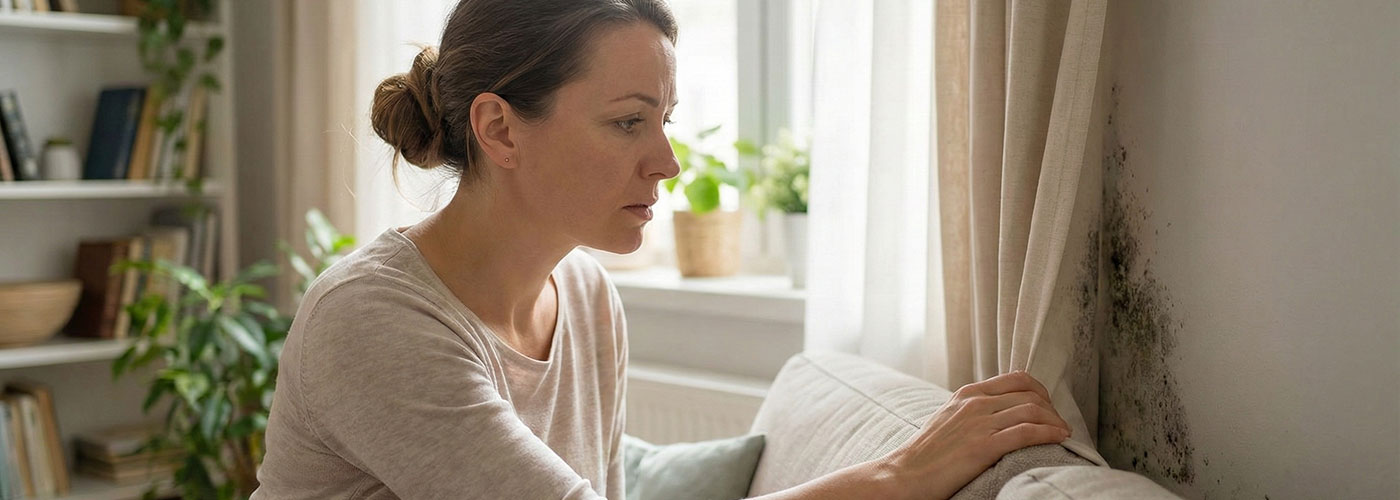
Early-stage mold doesn't always look like the black patches you see in photos. Watch for:
- Yellowish or brown water stains
- Small green or black speckles
- Bubbling or peeling paint
- Warped baseboards pulling away from walls
- Soft or spongy drywall
Why it matters: Surface mold is never just surface-level. What you see is the visible portion of a larger colony growing inside the wall. By the time mold breaks through drywall or paint, contamination has already spread behind it.
South Florida's climate makes humidity control critical. Signs your home has moisture problems:
- Condensation forming on windows or mirrors
- Bathroom walls that stay damp hours after showering
- Air that feels heavy or sticky
- AC running constantly but humidity stays above 60%
Why it matters: Mold doesn't need a leak to grow—sustained humidity above 60% is enough. Poor ventilation, undersized AC units, or ductwork issues create conditions where mold thrives without any obvious water source.
Children, elderly family members, and anyone with asthma or compromised immune systems react first to mold exposure.
Warning symptoms include:
- Wheezing or shortness of breath
- Nighttime coughing fits
- Asthma attacks increasing in frequency
- Chronic respiratory infections
Why it matters: Mold spores become airborne and circulate through HVAC systems, meaning contamination in one area affects your entire home. When vulnerable family members show respiratory symptoms that doctors can't explain, mold exposure should be investigated immediately.
This is the number one reason homeowners finally call professionals.
Recurring mold means:
- The moisture source was never identified or fixed
- Hidden growth exists inside walls or behind materials
- Surface cleaning spread spores to new areas
- Improper products failed to kill the colony
- Contaminated materials weren't removed
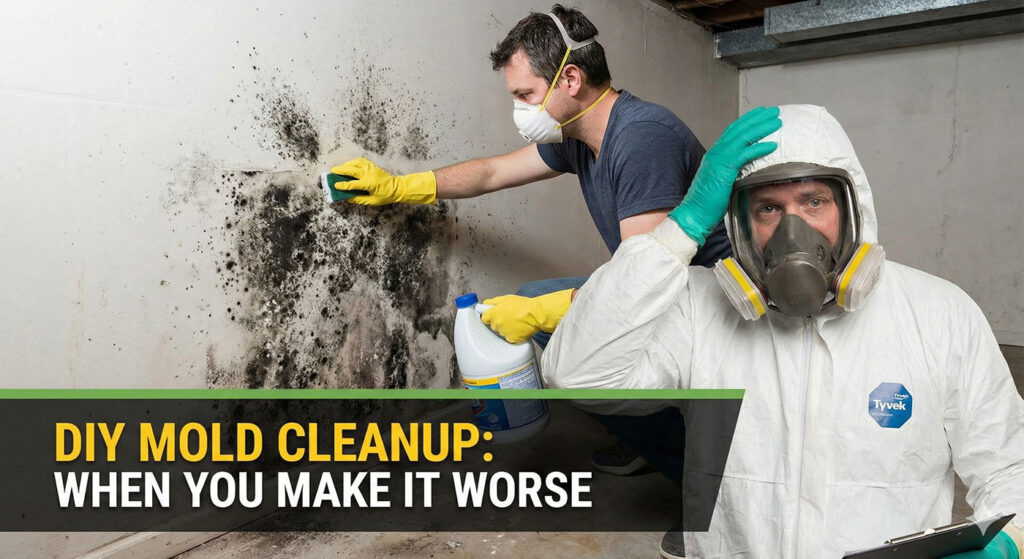
Why it matters: DIY mold cleaning addresses symptoms, not causes. Without eliminating the moisture source and properly remediating contaminated materials, you're wasting time and allowing the problem to worsen.
What Professional Mold Testing Actually Tells You
A certified mold inspection provides:
- Identification of mold species present (some are more dangerous than others)
- Location of moisture sources feeding mold growth
- Extent of contamination—including hidden areas
- Air quality testing to measure spore concentration
- Detailed remediation protocol
- Documentation for insurance claims
Testing eliminates guesswork and gives you a clear action plan—not just a quote to rip out drywall.
When to Call for Professional Mold Testing Immediately
Contact a licensed mold inspector if you’re experiencing:
- Strong musty odors with no visible source
- Water damage within the past year
- Unexplained health symptoms that improve away from home
- Visible mold that returns after cleaning
- Buying or selling a home with suspected moisture issues
- Chronic humidity or condensation problems
In these situations, mold testing isn’t optional—it’s the first step in protecting your health, your home, and your property value.
Get Professional Mold Testing Before Small Problems Become Major Restoration Projects
Mold doesn’t stay contained, and it doesn’t resolve on its own. Every day you wait allows contamination to spread deeper into building materials, making remediation more extensive and expensive.
The earlier you identify the problem, the faster and more affordable the solution.